
This twist on American buttercream frosting stands up to a warm day, is perfect for piping, and it’s not too overly sweet. It the perfect buttercream for summer.
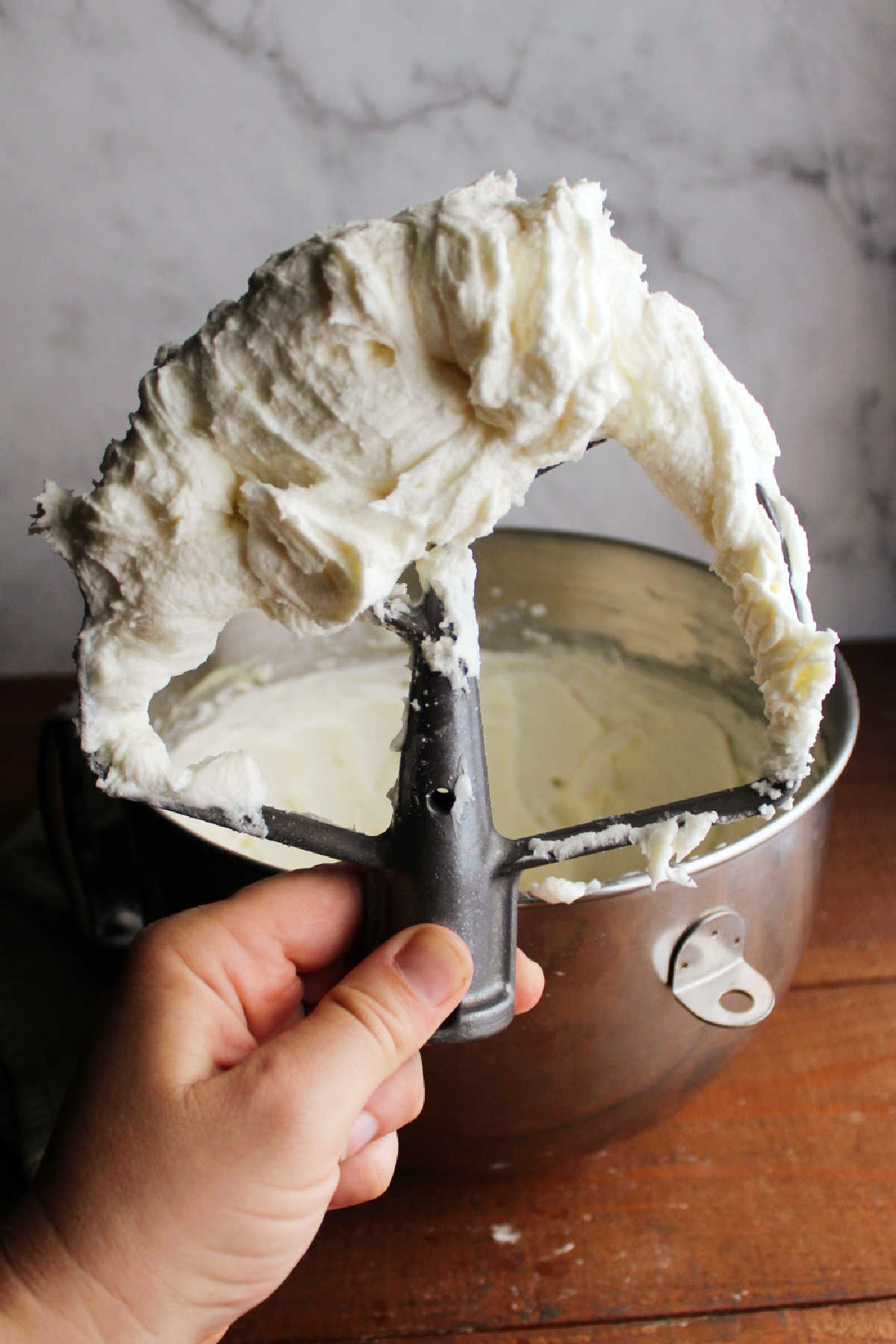
Serving frosted cakes and cookies during the summer can cause a lot of anxiety for bakers. This recipe uses several tricks to help it hold up in the heat as without just adding more powdered sugar, so it’s not too sweet.
This frosting does it all without making your teeth ache. When decorating cakes in the heat and humidity, you have to break out a few tricks to make it work.
My family prefers American buttercream to egg based buttercreams like Italian meringue buttercream. So, I have to use those tricks when I am making cakes for their special occasions.
I am sure you all know I don’t need much of an excuse to play with frosting. It’s one of my favorite things after all.
So I studied a variety of recipes, read up on the tips of a variety of people who bake for a living, and tinkered. This recipe has now been used for several summer weddings.
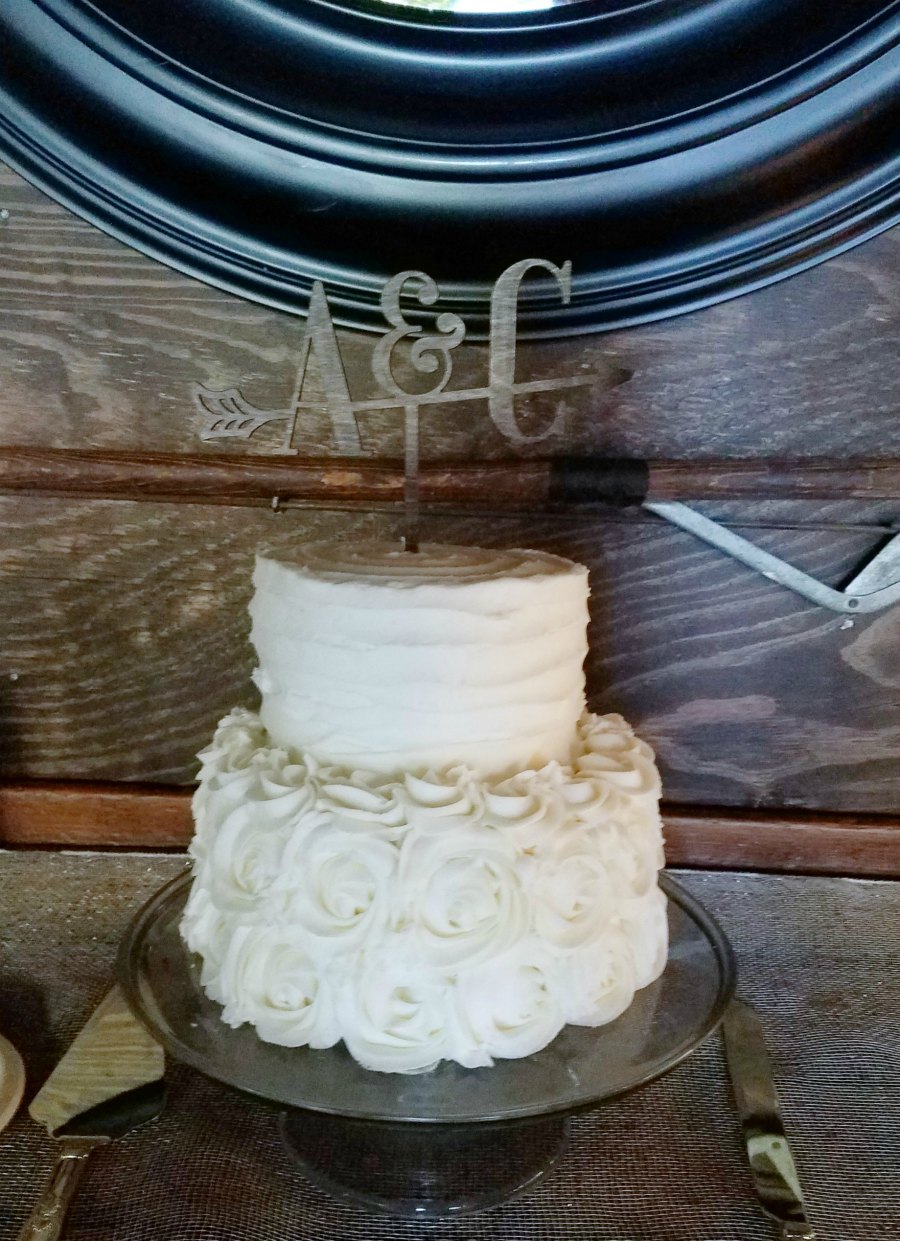
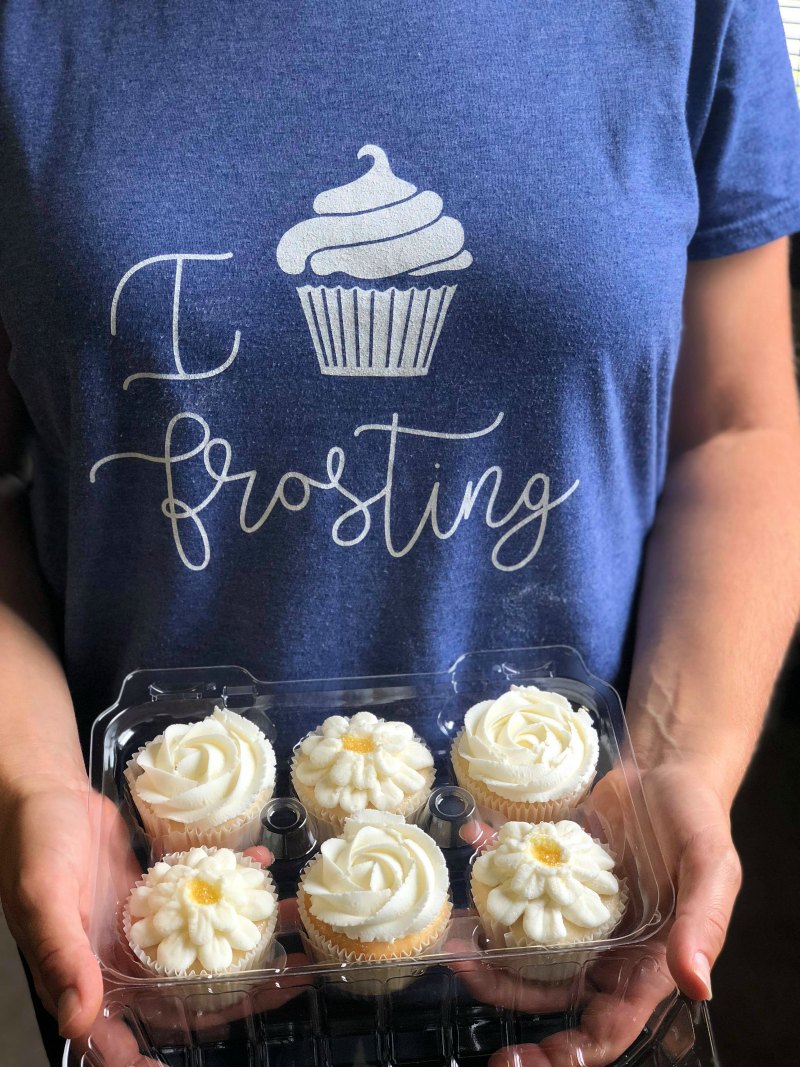
I used it on both cupcakes and a cutting cake for my brother’s outdoor wedding. We kept everything inside for as long as possible, because it was a 100°F day.
However, they still held up nicely once we moved everything into the barn reception area. And believe me, it was hot in there!
How Much Frosting Does This Recipe Make?
This recipe makes just shy of 6 cups of buttercream. That is enough to frost an 8 or 9 inch layer cake with extra frosting for piping on decorations.
It is enough to frosting a 10-inch layer cake without extra piped decorations. It can generously frost 4-5 dozen cupcakes depending on how much frosting you pipe on each cupcake.
Tips for Making Buttercream That Holds Up to Heat
After consulting with bakers and the internet, everyone suggested shortening as a base to hold up to the heat. Of course that makes sense, the melting point of shortening is higher than that of butter.
However butter based buttercreams taste better, and we prefer their texture. Using half butter and half shortening allows you to get the best of both worlds.
The next tip is tons of powdered sugar. Of course that’s kind of a must with American buttercream anyway, but a nice high ratio of sugar helps promote the crust which helps your designs hold their shape in the heat.
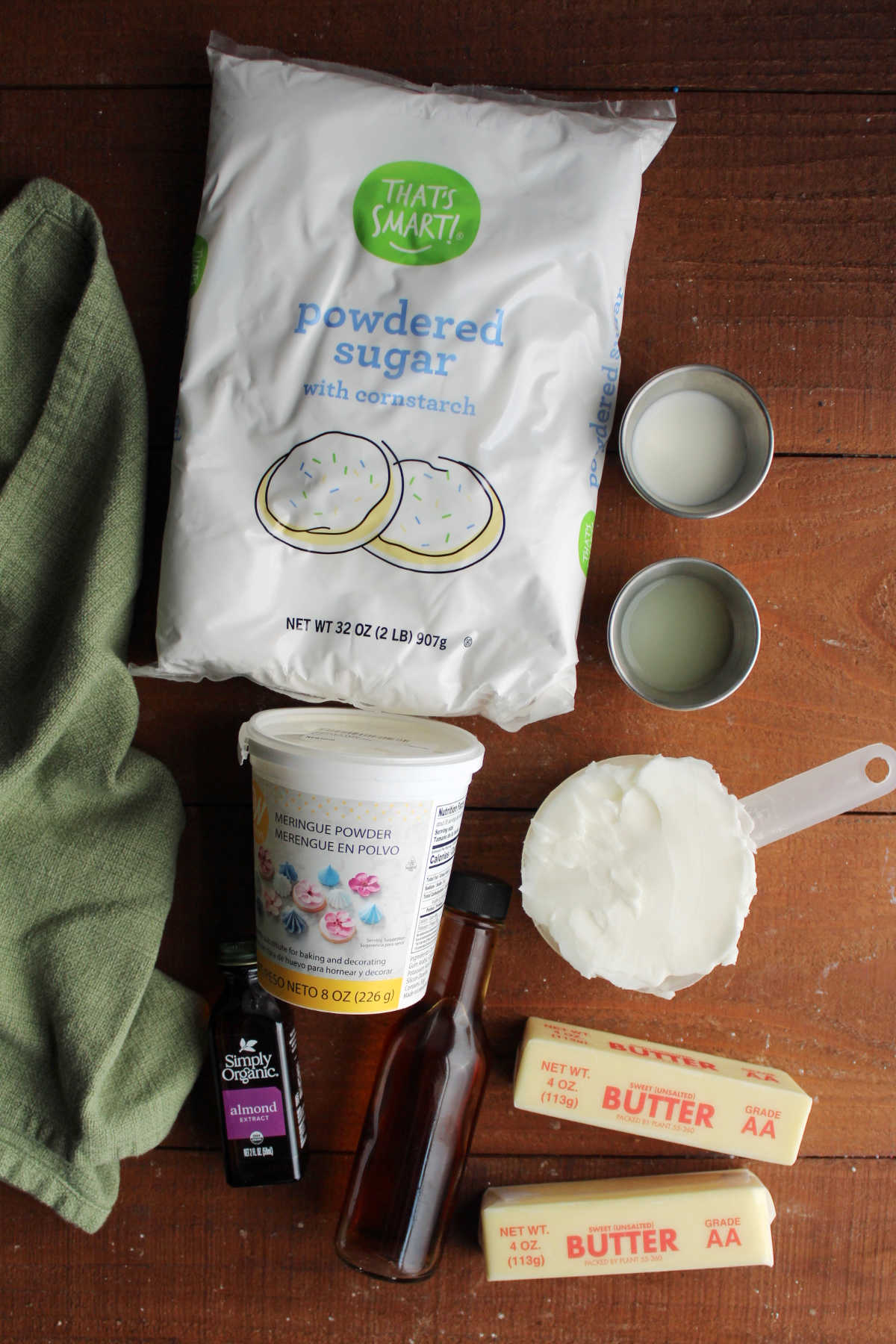
I was all for that, but didn’t want the frosting to be too cloying. So I used some lemon juice as part of the liquid.
Not enough to make it taste like lemon, just enough to counteract some of the sugar. A tablespoon in about 6 cups of frosting doesn’t give a detectable lemon flavor.
A hearty pinch of salt helps balance out the sugar even more and helps give flavor to the almost flavorless shortening.
Email Me The Link
I like adding a little bit more flavoring than I do in a standard buttercream too. I almost always add 3 teaspoons of vanilla extract.
You just use vanilla extract if you would like. However, I think it’s nice to use a second complimentary flavor to the frosting.
Just a few drops of almond or lemon extract, or a bit of an emulsion like princess or creme bouquet can make a big difference. It will make it taste like the buttercream came from a bakery,
Or use some butter extract to deepen the butter flavor. It sounds strange, but it can take the frosting from good to great.
The next tip was to use some meringue powder to help take the crust to the next level. It gives that little bit extra insurance that I am happy to take when making a cake for an outdoor wedding.

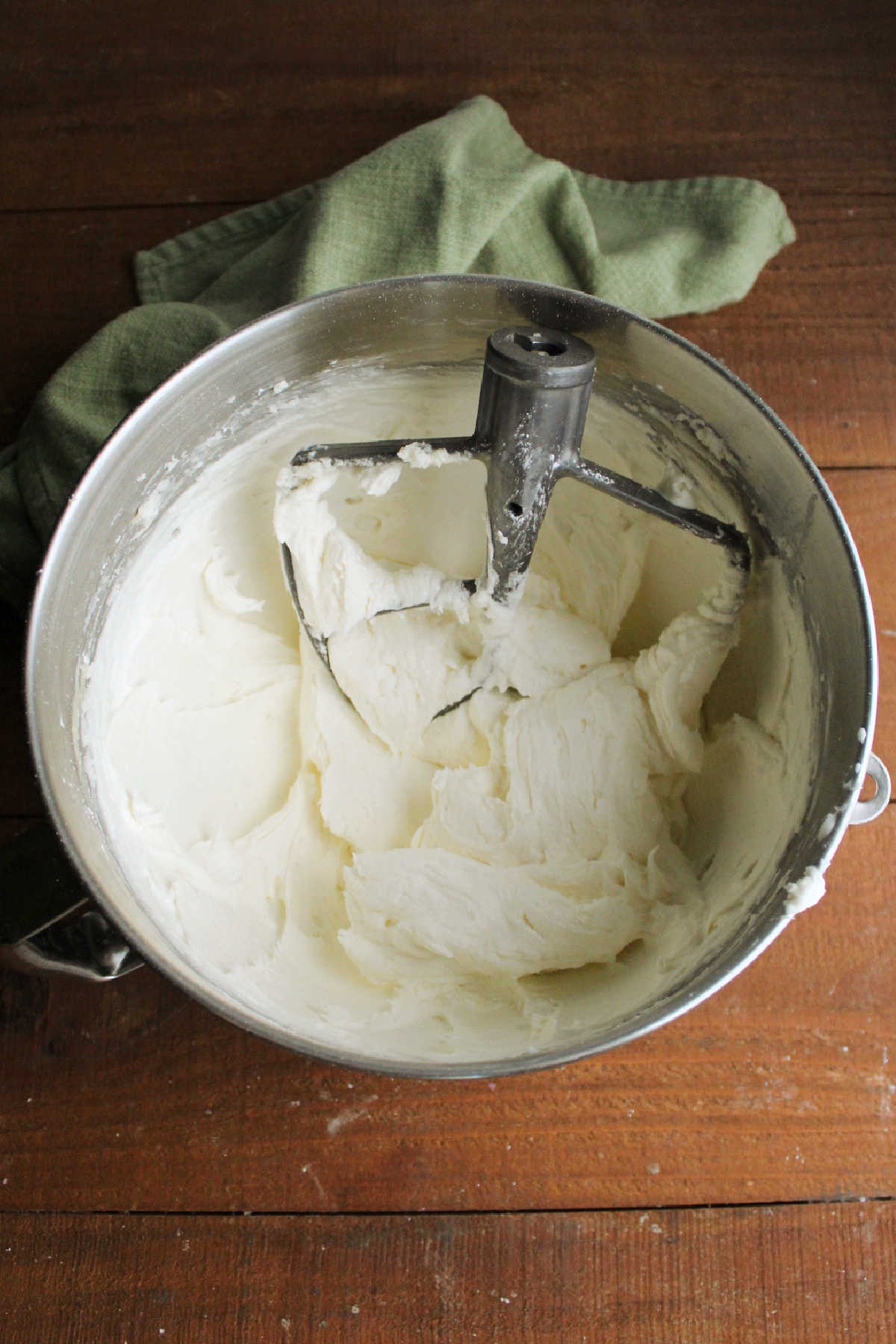
Once the frosting comes together, mix it on low for several minutes to improve the texture and keep from whipping in too much air.
Of course no butter based frosting is going to hold up to the heat forever. Chilling the cake before you take it into the heat and limiting the time it spends in the heat is going to be key no matter the recipe.
I can say however, I was really pleased with how this recipe has held up to Mother Nature every time they have come in contact!
What are your best tips for making heat resilient frosting?
Does this frosting form a crust?
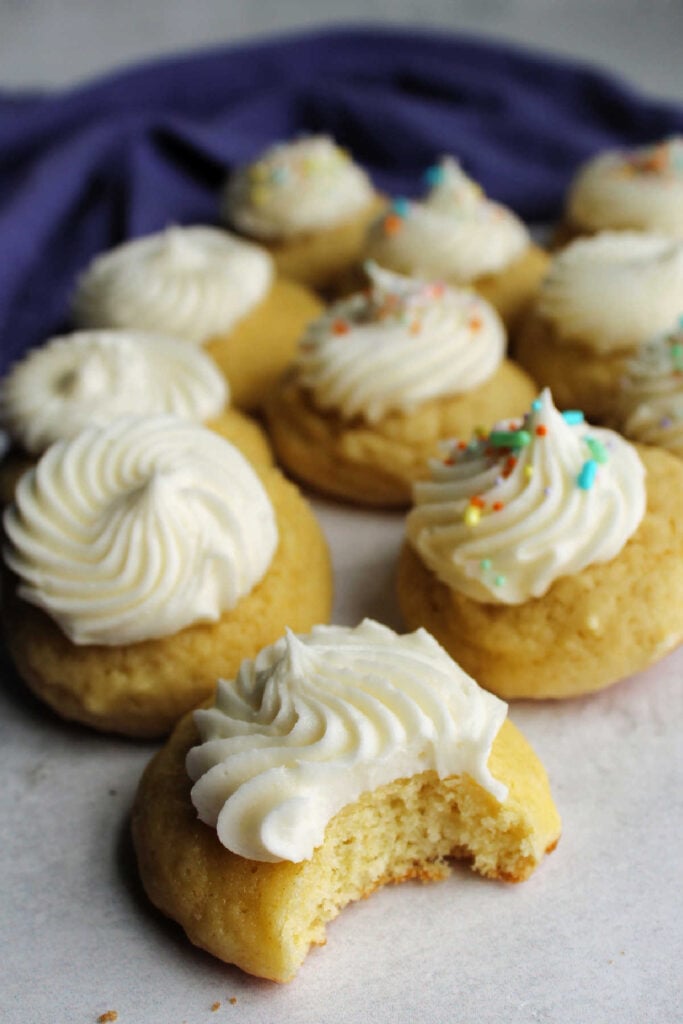
Yes, this buttercream recipe forms a crust. Putting frosted cake or cookies in the refrigerator for a little bit will help to set the frosting faster and will hasten the formation of the crust.
Not Too Sweet Buttercream
Ingredients
- 1 cup unsalted butter
- 1 cup shortening
- 2 pounds powdered sugar
- 2 Tablespoons meringue powder
- ½ teaspoon salt
- 2½ teaspoons vanilla extract
- 1 teaspoon other flavoring see notes
- 1 Tablespoon lemon juice
- 2-3 Tablespoons milk or cream
Instructions
- Beat 1 cup unsalted butter and 1 cup shortening until light and creamy.
- Add about a cup of powdered sugar, the 2 Tablespoons meringue powder and ½ teaspoon salt. Mix until incorporated.
- Continue to add the 2 pounds powdered sugar, a bit at a time and mix well between each addition. Be careful to only beat the mixture on medium-low speed, allowing it to run for as long as it takes. You don't want to incorporate too much air.
- Once the powdered sugar is all added, mix in 2½ teaspoons vanilla extract, 1 teaspoon other flavoring and 1 Tablespoon lemon juice. Beat on medium speed for a couple of minutes.
- Add the 2-3 Tablespoons milk or cream a little bit at a time, mixing well between additions, until you have the consistency you'd like.
- Store any extra in an airtight container and whip a bit to fluff before using.
Notes
- I like using a mix of flavorings to give the frosting more depth of flavor. The vanilla is good mixed with almond extract, lemon extract, princess or creme bouquet.
- Buttercream can be stored in an airtight container at room temperature for a day or two. It can be refrigerated for up to a week. Or frozen for several months. If chilled, bring it back to room temperature and give it a stir before using.
- This recipe is enough to frost an 8-9 inch layer cake with extra frosting for piping on decorations. It is enough to frost a 10 inch layer cake without extra decorations. Or it can be used to pipe swirls on about 4 dozen cupcakes.
- You can cut the recipe in half if you don’t need 6 cups of frosting.
Video

Email Me The Link
Did you try this recipe?
Don’t forget to leave a rating below and make sure to follow on Pinterest and Instagram for more!
If you are a frosting fanatic like me, check out my Frosting 101. It goes through the different types of frosting and links to all sorts of delicious recipes!
Get social!
Recipes in your inbox

I love this recipe! I used it on my granddaughters vintage heart cake.
I’m making another cake and am wondering if I can make ahead. I have to transport it 4 hours away.
Yes, it travels well. I would chill the cake before making the trip to firm everything up and keep the car cool during the trip too. Luckily that shouldn’t be too hard during this time of year. I am glad you like it!
Thank you for the recipe of not too sweet buttercream.
Could you tell how many time I would need of this recipe to frost a 21 x 15 size pan with 2 layers and frosting between?
You will need at least a double batch. I would probably make 2.5 or 3 batches to be safe. I’d rather have extra frosting than not enough. It freezes well if there’s too much.
Can you store this frosting for any length of time?
Yes. Buttercream stores really well. You can keep it in an airtight container on the counter for a couple of days. You can also put it in the fridge for up to two weeks or freeze it for up to three months. Just bring it back to room temperature and whip it for a minute or two before using.
What kind of shortening did you use?
Crisco or something similar works great.
Wow, this was the best frosting, now question is could I add cocoa powder to this same recipe for chocolate frosting?
You sure can! Just add it until you get the shade/flavor you are going after. You may need to add a bit more liquid to get the right consistency too.
Hi thank you for sharing. I saw in the reviews, many mentioned you giving them extra information about doing cakes in the hot summer. Did I miss that information or is it a benefit of the recipes?
Thanks so much
Kelly
Though no butter based frosting is going to hold up to summer’s heat forever, this one has all of my best tips worked in.
I’ve been looking for a buttercream recipe that is not too sweet. This is it. Great flavor with the vanilla and almond flavors. This will be my go to recipe from now on.
Yay! I am happy that you like it!
This is a very good buttercream frosting. Everyone that has tried it loves it.
Thank you! I love hearing that!
I’m looking for a shelf stable frosting recipe that complies with cottage food laws, which means it can’t contain butter. Could I do all shortening?
Yes, you can use all shortening. Maybe consider a drop or two of butter extract for flavor?
I double checked my ingredients for this recipe and I have no idea why it had such a horrible after-taste.
I had to throw out the entire batch.
Could my meringue powder have gone bad maybe?
I had my husband tasted it and he thought I must have used lard instead of baking shortening.
Not sure what happened.
Anyone else have this problem?
I am not sure why that would have happened. Possibly the shortening had started to go rancid?